Business Partnership Advisor
Together, we can fix your business and partnership problems

Chris Reich, Business Mediator
7 Reasons to Be Extra Nice in a Partnership Mediation

7 Reasons to Be Extra Nice in a Partnership Mediation
Chris,
My business partner and I can't talk without getting into a serious argument. When we get into mediation, I want to let him know all the reasons I can no longer work with him. I need to express my anger, right?
The Big Question for You to Consider When Going Into Mediation
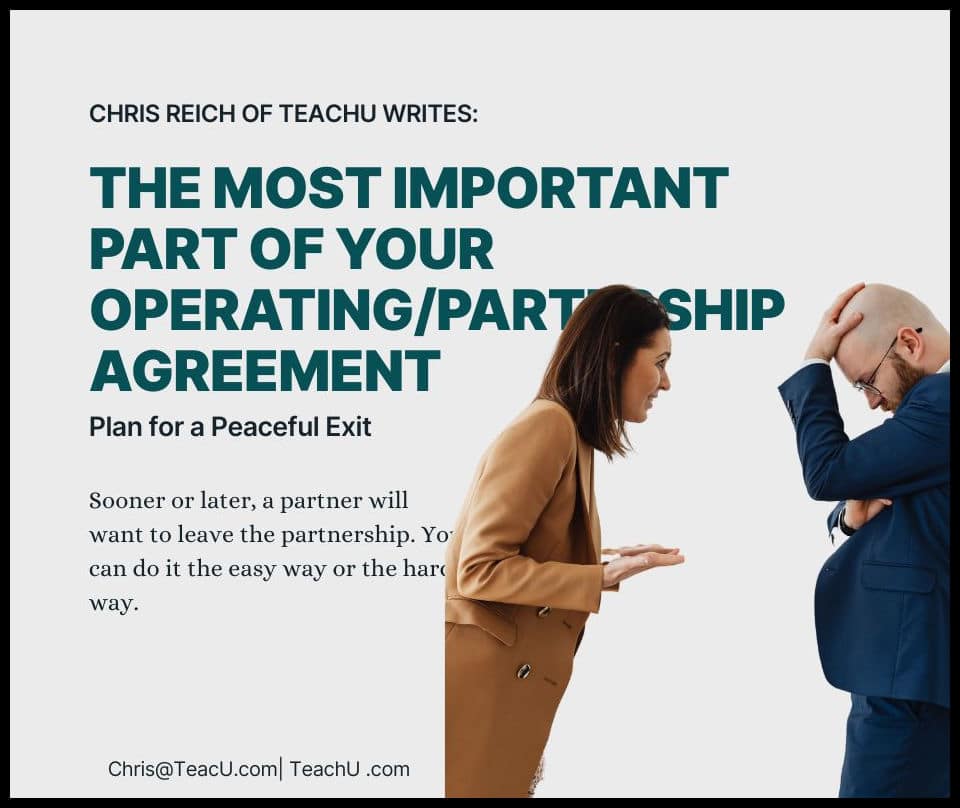
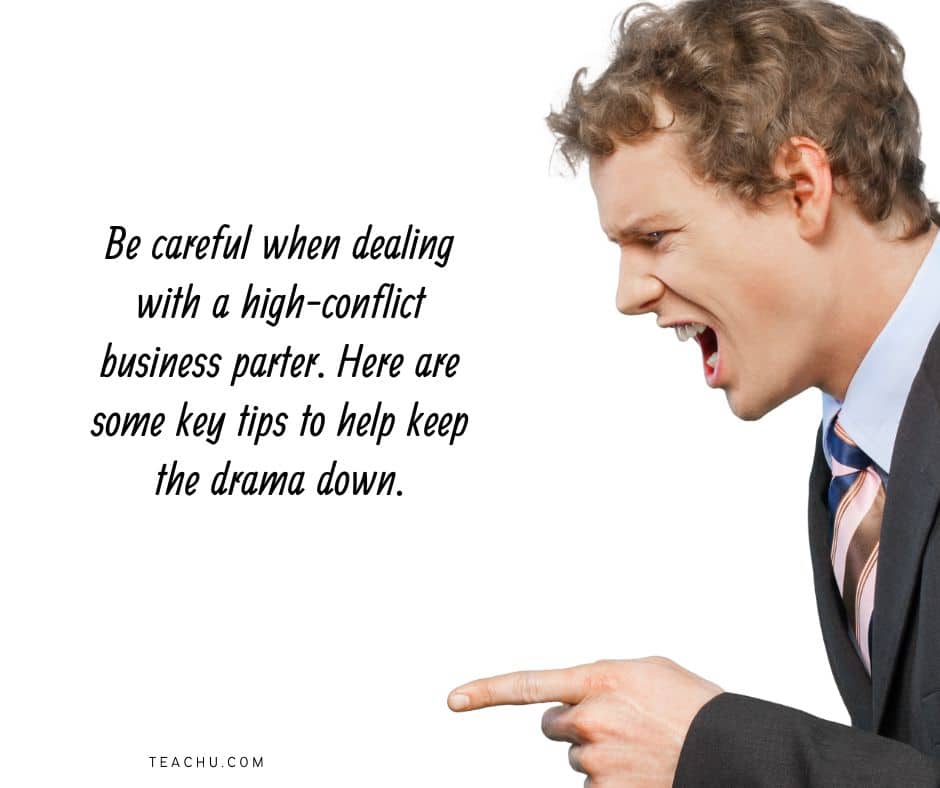
The big question you must resolve before the first meeting is this: Do you want to prove your point or do you want to get what you want? Choose wisely. Proving your point will spark arguments and it will cause your opponent to take a defensive posture. Why do that when you can be civil and get what you want?
Here are 7 Reasons to Be Civil in Mediation
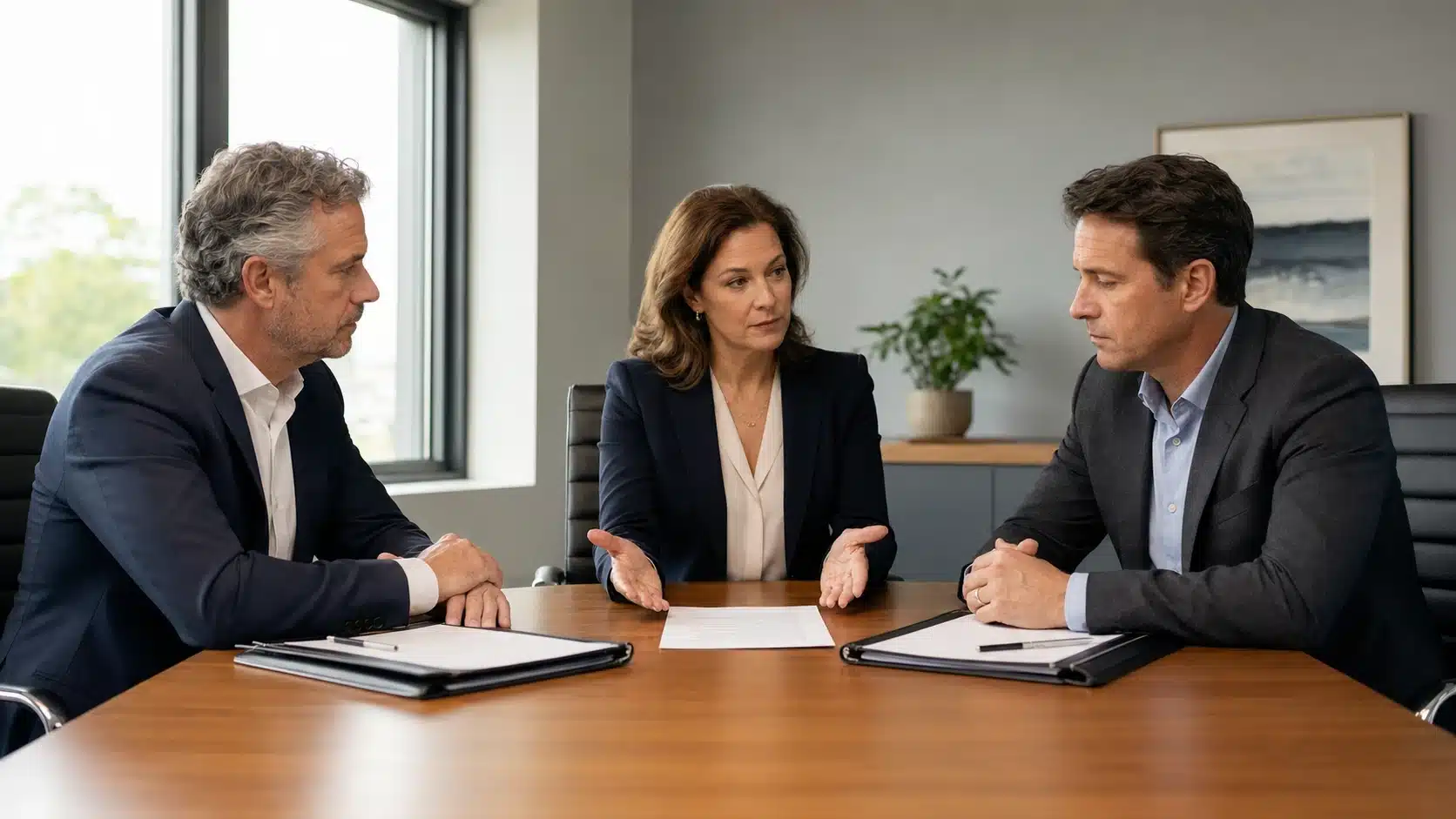
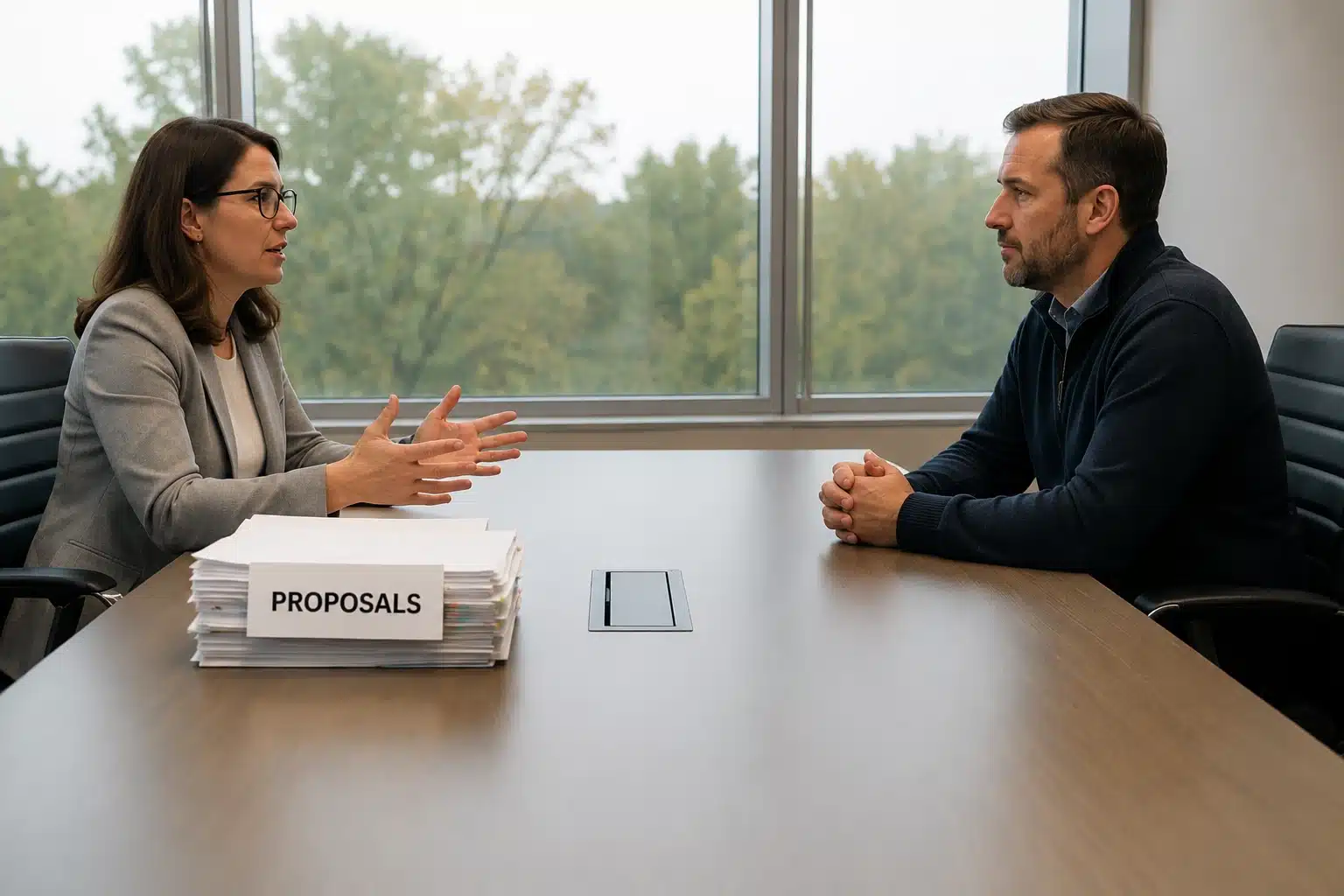
When partners seek mediation to resolve conflicts or disputes, it is important that they approach the process with a civil and respectful attitude. Partnership mediation is a non-adversarial way of resolving disputes, and it requires cooperation and collaboration from both parties. The goal of mediation is to find a mutually agreeable solution to the problem at hand, and this can only be achieved if participants are civil with one another.
#1 Promotes Effective Communication
Effective communication is key to a successful mediation process. When participants are civil, they are more likely to listen actively, express themselves clearly, and respect the other party's perspective. Conversely, if participants are rude or confrontational, communication may break down, leading to a breakdown in the mediation process. By being civil, participants can create an environment that is conducive to open and productive communication.
#2 Builds Trust
Trust is essential in any partnership, and it is especially important during mediation. When participants are civil, they are more likely to establish trust with one another. They can share information freely without fear of retaliation or judgment. Trust also helps participants to feel more comfortable and confident during mediation, which can lead to more effective problem-solving and decision-making.
#3 Encourages Cooperation
Cooperation is essential in partnership mediation. When participants are civil, they are more likely to work together to find a solution that is beneficial to both parties. Cooperation requires participants to be open-minded, flexible, and willing to compromise. When participants are civil, they are more likely to exhibit these qualities, which can lead to a more successful mediation process.
#4 Reduces Tension
Conflict and tension are inevitable in any partnership, and mediation can be a tense process. However, when participants are civil, they can help to reduce tension and create a more relaxed environment. This can make the mediation process less stressful for all parties involved and can help to promote a positive outcome. And, believe me, as a Mediator, I appreciate it very much when people are civil.
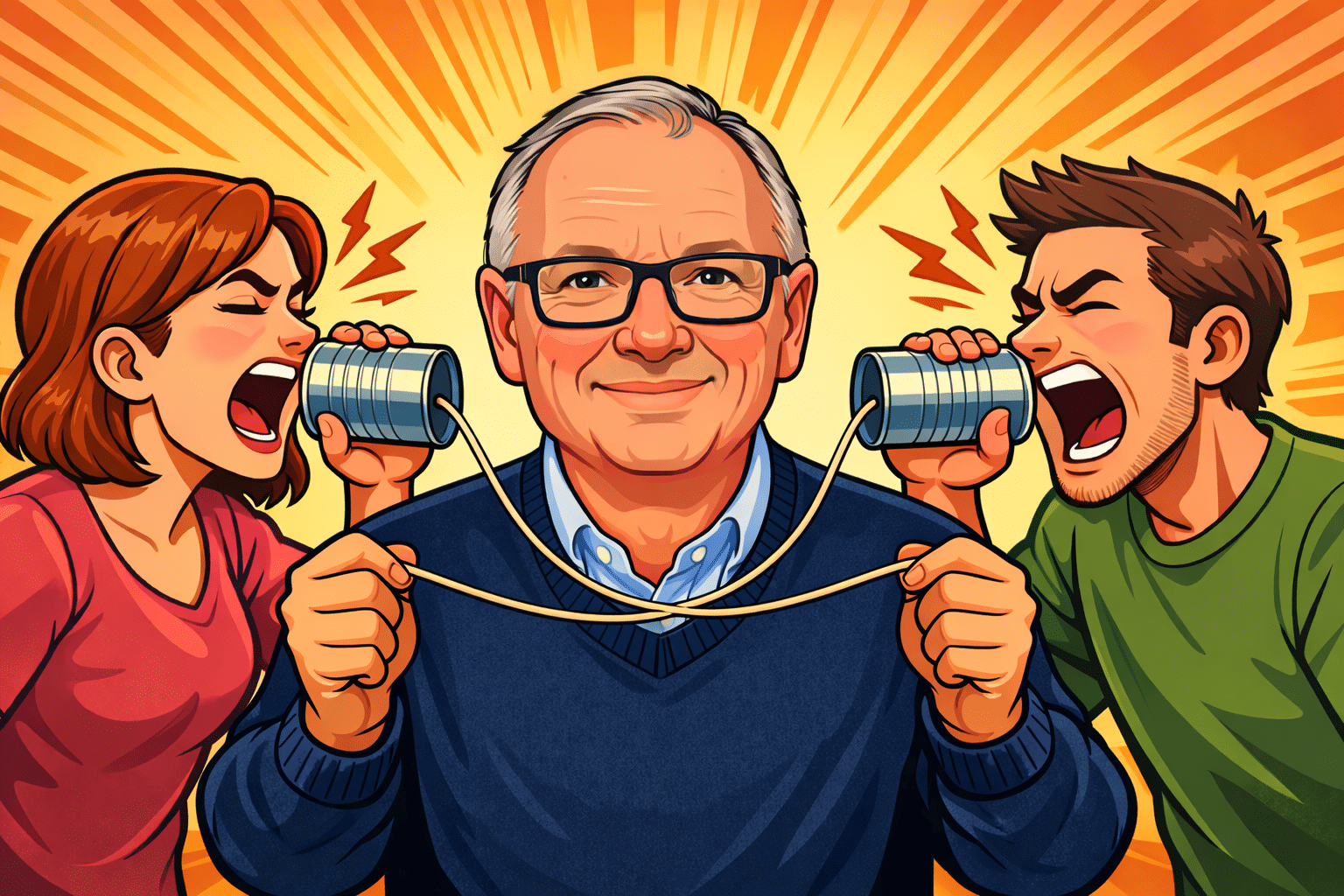
When people are civil in Mediation, I know both sides will be happy with the outcome and that the mediation will take far less time and save a lot of money. But, you can argue and try to prove your point if that's important to you.

Being civil will save you time and money on your Mediation. And, both sides always come out better.
Chris Reich, Business Partnership Mediator
#5 Demonstrates Respect
Civility is a form of respect. When participants are civil, they are demonstrating respect for the other party and for the mediation process. This can help to establish a positive tone for the mediation process and can lead to a more respectful and productive dialogue between the parties.
#6 Enhances Problem-Solving
The goal of mediation is to find a mutually agreeable solution to a problem or dispute. When participants are civil, they are more likely to engage in productive problem-solving. They can explore creative solutions, consider multiple perspectives, and evaluate different options without becoming defensive or argumentative. This can lead to a more successful mediation process and a better outcome for all parties involved.
#7 Saves Time and Money
Mediation can be a time-consuming and expensive process. However, when participants are civil, they can help to streamline the process and reduce the amount of time and money required to reach a resolution. Civility can help to keep the mediation process on track and prevent unnecessary delays or complications.
Summary
In conclusion, civility is essential in partnership mediation. It promotes effective communication, builds trust, encourages cooperation, reduces tension, demonstrates respect, enhances problem-solving, and saves time and money. By approaching the mediation process with a civil and respectful attitude, participants can increase the likelihood of a successful outcome and preserve the relationship between the parties. Mediation is a valuable tool for resolving conflicts and disputes, and civility is key to unlocking its potential.
Remember, you can argue and try to prove your point, or you can get what you want. Choose wisely.
Chris Reich, Partnership Mediator
"Don't waste your time arguing when you could be working out a deal you'll be happy with."
Are You Ready to End the Stress of Your Partnership Problems? Contact Me Now for a 100% Confidential Consultation.