Business Partnership Advisor

Together, we can fix your business and partnership problems

Chris Reich, Business Mediator

Things to Know About Partnership Buyouts— Part 2

Chris, 

If I tell my partner that he can buy me out for $60,000 (way less than my half is worth) and he turns me down, doesn't he have to let me buy him out for the same price?

Shotgun Buyouts

The question refers to what is called a shotgun buyout. If a buyout is rejected, the partner who rejects the offer must make the same offer to the partner who made the first offer. Let's clear this up.

Assume that you and I are partners. Our business is probably worth $500,000. If I offer to let you buy me out for a mere $100,000, and you reject the deal, then you must allow me to buy you out at the same $100,000 price. That's called a shotgun buyout. Even though I hate shotgun provisions like that, they can work. If I offer a very low price you better take it or I will get to buy you out at the same low price. The only good thing about shotgun buyouts is that they always end quickly with a buyout. But what happens if neither party can afford a buyout? That can be a messy way to force a separation of partners. What happens if I just want out? The business is failing and don't want the debt to land on me. I offer to sell you the business for $1. You say no. Now I must buy your interest for $1. You escape, the debts fall on me.

So, to answer the question, there is no legal requirement to buy a partner's share under any circumstances. Just because I want out doesn't me you have to buy me out.


#6 There is Nothing in Law Giving a Partner the Right to Force His Partner to Buy His Share

TRUE

Neither partner can be compelled to buy the interest of another partner. You can have the opportunity to leave at a fair price if you create a Partnership Agreement specifying the terms. It's that simple. Just be sure to protect each other and the business from a partner demanding a buyout if the business falls deep into debt.

You could create a clause that says something like, " if a partner would like to leave the business, after submitting his request in writing, his share will be redeemed for amount equal to 6 times the profit of the most recent 2 months." That accomplishes several things. First, it gives partners a way out if they need to leave the partnership. More importantly, it sets the price in advance. No arguments. No fights over price. 

Please note that I am giving an example only. The goal is to set a buyout price in advance. If your partner approaches you about buying your interest, you are not bound to that deal. You can negotiate. We want to make it possible but not easy for a partner to bail out.

 #7 A Verbal Agreement Is as Good As a Written Agreement

TRUE (ugh) and FALSE

Yes, verbal agreements are legal and binding. But, in contracts, and a Purchase Agreement is a contract, the details are very important. Rarely can all the details needed to complete a partner's buyout be verified using a verbal agreement. It's a good idea to get it all in writing.  Would you spend thousands of dollars and suffer years of stress to battle out a verbal agreement in court? Don't.

While verbal agreements are legal and binding, they are difficult to enforce. If someone backs out, the other party will have to prove the existence of a verbal agreement. 

Don't try to be clever and dupe your partner into accepting a verbal deal. It takes more than just "okay" to make a deal binding. 

"If the price is right, would you let me buy you out?" Your partner responds, "Yes!" That doesn't mean you have a deal. And, you can't claim that buyout discussions are open because your partner agreed to a buyout. I get at least one call a week about this. "My partner agreed to a buyout and now he won't talk with me about it." 
Part 2 of Things You Need to Know About Partnership Buyouts

"I plead with partners every day to get a Partnership Agreement."

Chris Reich, Business Mediator

#8 If Your Partner Will Not Discuss Buying You Out, You Can Force the Closing of the Business

FALSE

You can force the end of the partnership, but your partner can elect to continue the business. One partner in a 50/50 partnership cannot force the business to close. That's why it's always a good idea to make big structural moves carefully. Again, having a Partnership Agreement will avoid this issue. It's worth the time and effort to create one.

#9 Partners Need Lawyers to Draft all Agreements Between Partners

FALSE

If you and your partner agree that each partner will have a spending limit of $1,000 per month, and you draft that as a resolution stating that, you then have a binding, legal agreement. Does having a lawyer draft it make it "more legal"? No. However, lawyers are trained in matters like this and will draft your agreement more precisely.  Lawyers are a bit like insurance. The value of a lawyer isn't in winning your case in court; it's in helping you avoid the need for court!

Did You Like This Post? Would You Please Rate It?

Click on a star to rate it!

Average rating 4.7 / 5. Vote count: 15

No votes so far! Be the first to rate this post.

"When a partner decides to leave a business, it can cause a lot of turmoil. Ideally, the business can support a buyout, but when it can't, escaping the partnership is difficult. When the Operating Agreement specifies how a buyout is to be conducted, the process is much easier. Problem is, few partnerships have a proper Operating Agreement to govern a buyout."

Are You Ready to End the Stress of Your Partnership Problems? Contact Me Now for a 100% Confidential Consultation.
Prefer a direct approach?

Email: Chris@TeachU.com

Phone: (530) 467-5690

List of All Business Partnership Mediation Articles

This Page is a searchable index of all posts pertaining to Business Partnership Mediations. This page is an excellent resource for articles about partnership mediation. Find all categories including Partnership Disputes, Family Business Mediation, and Partnership Agreement.

How a Mediator Can Help Your Family Business

As Moderator to many family businesses, I have helped with succession planning, compensation planning, and resolving of key questions around the operation of the enterprise. It can be difficult for an adult offspring to talk with Dad about a raise.

What Makes a Contract Legal and Binding?

As you see, a contract can be legal yet not binding. And, the most important take away is that a promise, even if written up and signed, is not binding. If an agreement is not binding, it isn’t enforceable. I assume you want your agreements between you and your partner(s) to be legal, binding, and enforceable. Let’s look at the pieces that must be included to make a valid, binding contract.

The Best Tool for Successful Negotiation

Before I give you the secret to easier and successful negotiation, let me explain a few things that don’t work. In fact, these will work against you. From years of watching people negotiate buying or selling, trying to change processes, or reaching general agreement, I have seen what works and what doesn’t when partners are negotiating with each other.

Chris Reich, Business Partnership Mediator can help you fix the communication issues with your partner.

Problems in the Partnership? Fix the Communication

I’ve found a common problem with communication when I’m conducting mediation meetings. People always think they know what the other party is thinking. They’ll say things like, “I know Bill won’t like this, but I think…” Opening your thoughts with that sort of lead in is going to put ‘Bill’ on edge before you even make your point. Never start by negatively setting the stage. So then, how should you start a conversation about a hard subject? In this post I’ll give you the 7 steps to conduct less tense and more fruitful meetings with your business partner.

This is the most important clause in your operating agreement: How to treat the voluntary exit of a partner?

The Most Important Clause in Your Operating Agreement

To be fair, many Operating Agreements have at least minimal language regarding a Partner’s voluntary exit from the Partnership. But, most of the time, those clauses are so vague they make the situation worse.

Business partners having a discussion across a desk. Scene feels tense

Can You Be You with Your Business Partner?

Partnerships are much like romantic relationships. When it’s all new and exciting, we can easily become infatuated to the point of overlooking differences. After all, don’t the differences make the partnership stronger? Sometimes. Most often differences magnify with time and become triggers to arguments. As time goes by, the differences you ignored become important. What do you do when the differences break the partnership?

Image of chef looking angry. Chris is expressing the desire he has sometimes to want to yell at disputing parties to get their act together and avoid court.

I Want to go Gordon Ramsay Sometimes!

Sometimes, in Partnership Mediations, people will dig into very irrational positions. And sometimes, when there is tension in a partnership, as a professional mediator, I can see an easy solution. When disputants won’t do simple things to protect their business, it makes me want to scream!

Image shows folded hands over a contract being negotiated.

5 Tips for Successful Buyout Negotiations

My business partner and I can no longer work together. We’ve tried to talk about a buyout—I want to buy him out—but it always leads to an argument. Do you have any suggestions for conducting buyout talks that don’t turn into an argument? Read these tips to conduct Buyout negotiations without tension.

Father and Son as image for Family Business Succession Planning.

Make a Succession Plan for the Family Business

Family Business Succession Planning: Make a definite plan. How will they support the parents and when can they take charge. That’s what they want.

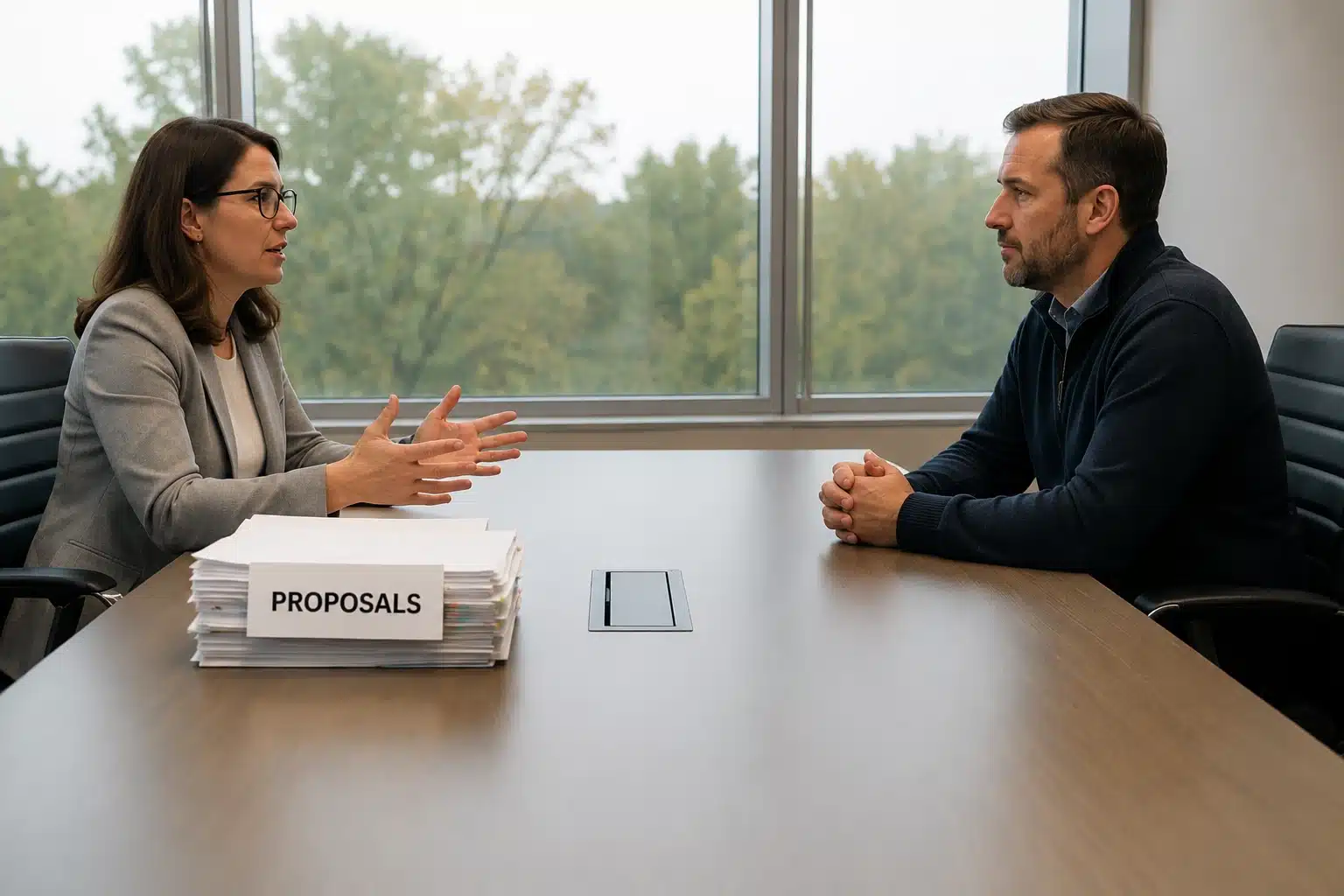
Image of two people negotiating a partnership buyout with the text "Buyout Negotiation Tips"

10 Tips to Conduct a Successful Partnership Buyout

Before I offer you my tips on conducting the buyout negotiations with your partner, let me offer a big piece of advice. Use a Mediator. I say that because there is a LOT of emotion around buyouts. It is an extremely personal and emotional process. People always underestimate just how emotional separating from a business is.

The image shows an angry man pointing a finger at these words, "Be careful when dealing with a high-conflict business partner. Here are some key tips to help keep the drama down."

6 Steps to Deal With a High Conflict (Bully) Business Partner

The High Conflict Business Partner AKA the Bully is the most difficult type of person to deal with. Here are 6 Tips to help you deal with the Bully Partner.

5 Red Flags That Say Your Business Partnership is in Trouble

Business partnerships can be a fantastic way to pool resources and knowledge in order to create a successful enterprise. However, even the most well-intentioned partnerships can break down if certain warning signs are ignored. In this post, I will point out the 5 red flags that should never be ignored when you see them in your business partnership and provide you with guidance on how to deal with them.

Eventually a partner is going to want to leave the business. Plan ahead advises Chris Reich of TeachU.

Plan for the Day a Partner Wants to Leave the Business

If you have read my other posts, you know I strongly encourage people who form Partnerships to create a Partnership Agreement. The document must specify how a Partner can leave the Partnership voluntarily while ensuring that the business is protected from two potential disasters: firstly, by avoiding terms that could bankrupt the business, and secondly, by preventing the admission of unplanned Partners.

This article is about why people in mediation should be civil to each other.

7 Reasons to Be Extra Nice in a Partnership Mediation

When partners seek mediation to resolve conflicts or disputes, it is important that they approach the process with a civil and respectful attitude. Partnership mediation is a non-adversarial way of resolving disputes, and it requires cooperation and collaboration from both parties.

Image about succession planning showing father and son in business.

Succession Planning in Family Business

Let’s look at how to plan for the next generation of your family to run your business. It’s never too early to make a succession plan and the earlier you start, the more options you have.