Business Partnership Advisor
Together, we can fix your business and partnership problems

Chris Reich, Business Mediator
The Best Tool for Successful Negotiation

The Best Tool for a Successful Negotiation - Part 1
Chris,
I have been trying to work out a process change at my business but my partner, a jerk, won't agree to ever making any changes. How can I get him to be more pliant when it comes to working with me?
What Doesn't Work when Negotiating
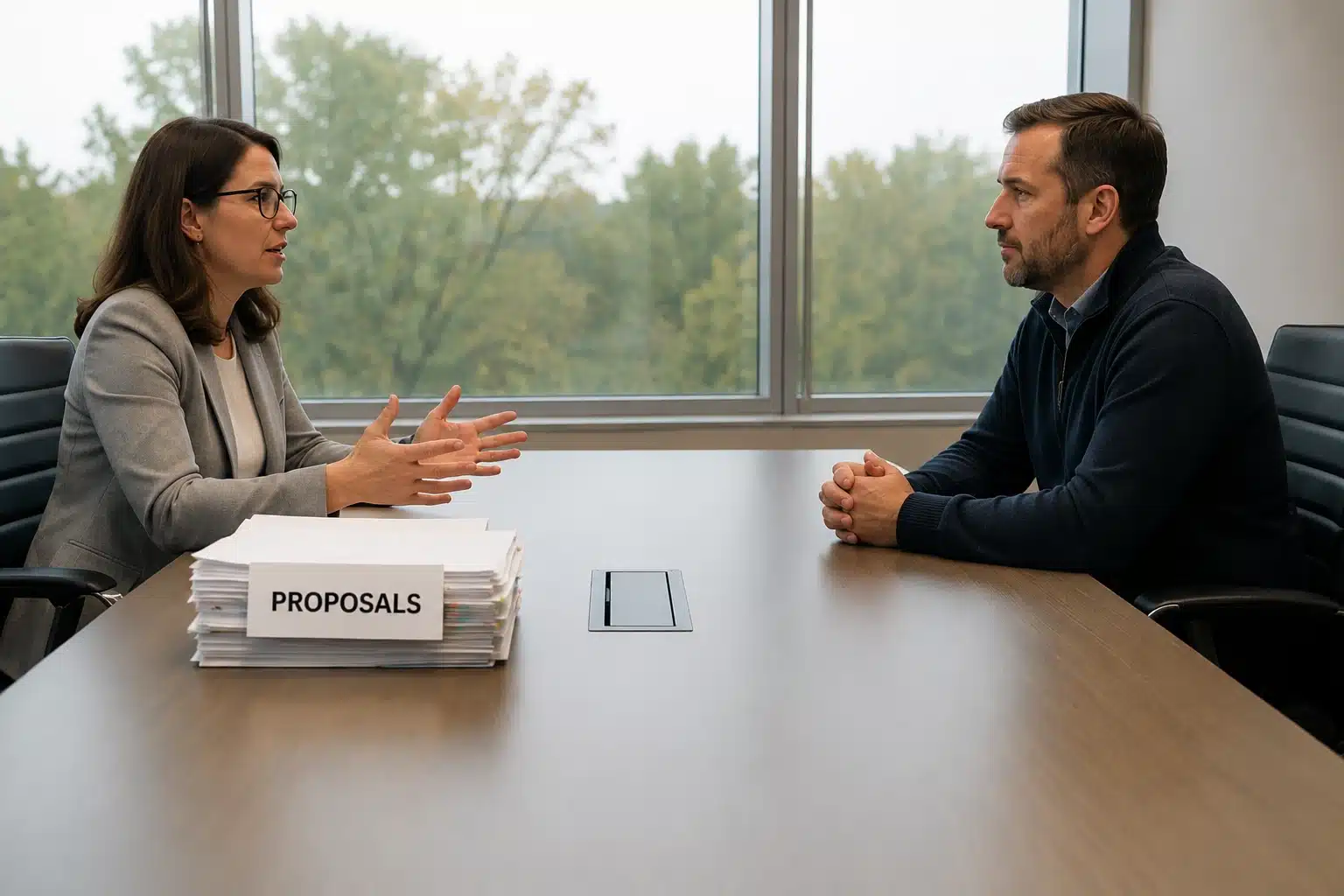
Before I give you the secret to easier and successful negotiation, let me explain a few things that don't work. In fact, these will work against you. From years of watching people negotiate buying or selling, trying to change processes, or reaching general agreement, I have seen what works and what doesn't when partners are negotiating with each other. Let's start by looking at things that don't work. If you're negotiations are not going well, start by making sure you are not doing these things.
Bullying, Badgering, and Pressuring
This might seem obvious, and it should, but I see it all the time in partnership negotiations. I've written about dealing with partners who are bullies. Bullying intimidating the other side creates an obvious tension. People think that tension will trigger a flight response and cause the weaker party to capitulate. This sometimes works in situations where the bully has extreme power over the other size. Trump operates this way. To get what he wants, he'll humiliate, taunt, and even threaten anyone who won't do his bidding. He has power over those in his own party, but no power over Democrats though he has tried using frivolous legal actions to intimidate them without success. In a partnership, bullying will only cause the other side to retreat, not from their position, but from you. Bullying or any form of intimidation usually leads to a complete shutdown of communication. "I just refuse to talk with him." That's when I get the call to help get talks going.
Ultimatums and Demands
Certainly, we all have things we won't agree to or must insist upon in any particular negotiation. You won't pay more than you can afford, you might need cash all upfront in a sale. That's to be expected. The key is not to open your negotiation with demands or ultimatums often expressed as "my line in the sand". When people negotiate they see everything you get as something they aren't getting and, therefore, they will make a demand of their own. This sets up a cycle focussed on pieces rather than a total, big picture, global deal. Opening with demands or setting ultimatums also will typically lead to a communication shutdown.
I've seen situations where partners sit down to discuss one buying out the other and the one seeking the buyout [seller] will say something like, "just to save us time, I want you to know I won't accept anything less than $250,000 for my 50% of the company". That's a really stupid strategy for a number of reasons. Again, it often means communication will cease. If that's your bottom line price and your partner doesn't think he can afford it, why keep talking? Even worse, what if the other side actually had a higher number in mind? You've just lost out on a possibly better deal. Once you've drawn your line in the sand, you are limiting your own ability to negotiate. You wouldn't take $245,000 and a new car worth $90,000? Are you crazy? I actually saw this happen in a partnership buyout. The company could purchase a vehicle at a substantial discount because of a relationship with a local dealer. The vehicle, a truck in this case, was a deductible expense to the company whereas cash to the departing partner was not. I knew about the vehicle deal because the purchasing partner called to tell me about it. He said, "I didn't want to bring it up at our meeting because John has already said he won't even consider anything less than $200,000 in cash. I wanted to propose giving him $150,000 and buying him that new truck he's been looking at. Saves the company some money, and he gets more out of the deal."
Impatience
This is something I understand but always caution people to handle wisely. Few of us like the tension of negotiating. It's stressful. Few people find the tension of negotiating to be fun. Sure there are people who enjoy it, most do not. "I just want it over with" and "I'm only giving this process until the end of the month" are common things I hear when people are negotiating. I always advise parties to have patience. When offers are being exchanged, it takes time for the participants to digest the consequences and facts of the offers on the table. In buyouts or settlements, facts always come out that lead the parties toward reasonable positions. The thing is, pressure be it from bullying, ultimatums, or arbitrary deadlines almost always lead to communication shutdowns or stalemates. Allowing the other side to sit with your offer for a reasonable time creates comfort and trust. That helps get to what you want. Relax. Trust the process.

Just being decent can greatly help your negotiating position.
Chris Reich, Business Mediation Professional
The Best Tool for Successful Negotiation - Part 2
What Actually Works? Decency
So far, this post has been about what not to do when negotiating. Let's talk about the most powerful tool that will always help with improving your negotiation position. It's simple. Be decent. If you avoid insults, attacks, and ultimatums you'll go a long way toward what you want.
How Do We Do It?
It sounds ridiculously simple. Just be decent. But it means more than not doing nasty things when negotiating; it means handling your side of the talks more civilly. How? I always recommend the people use questions rather than assumptions. For example, don't say, "you won't like this, but I'm going to require all cash in my buyout". Make it a question, "how do you see funding my buyout?" As a starter, you might lead with, "how would you like our talks about my buyout to proceed?" You can even make it nicer by saying, "your contributions to our company's growth is very appreciated and I want to start by pointing that out. I feel that it's time for us to part ways as business partners, but I'll always be grateful for what we built together." You will never lose ground by being decent, respectful, and even complimentary.
I worked on a very tense buyout recently. One side stated, "if you will not take our one and only offer, we will proceed to arbitration where we will be able to have you removed as a partner for stealing from the company." That's a very serious accusation and it set our talks back [unnecessarily] by weeks. It was a stupid, immature, and false claim to make for the sake of posturing. Later, as talks became more decent and civil, we made considerable and rapid progress until that same idiot threw out the old claim again by saying, "I think we've come to terms, so if you don't agree to sign by Friday, I'm taking this to arbitration and the arbitrator will certainly side with us because of your past behavior." That stupid comment put us back to square one. Why not say, "I appreciate your contribution as a partner for these past three years, but I think we all agree it's time we agree on separating amicably". This happens most often in family businesses. It's easy to hurl insults at the sibling you've fought with in childhood! Don't let pride get in the way of getting what you want. Set your pride aside and be nice. Sometimes, all the opposing side wants to hear is that they are appreciated.
No Dangers Come from Being Nice
Our culture teaches us that "Nice Guys Finish Last". That is so untrue. Still, we see successful people who are real jerks, but that's often because the nice people in business don't make the news as often. But we forget about the guy who retires and gives his company to the employees. Or the owner who sells the company for millions and then shares the proceeds with the employees. Good, decent people do very well in business.
Summary
If you're in a negotiation, there is no harm in being decent, civil, and courteous to the other side. In fact, if you want to be heard and respected, be decent and respectable. Be reasonable. I'm not saying you must give up your position and capitulate on every point, just don't be nasty, insulting, or demanding. No one wants to deal with an immature, foot-stomping idiot. Ask questions to encourage dialogue and be patient. It's really true that good things come to those who wait.
"Don't let pride get in the way of getting what you want. Set your pride aside and be nice. Sometimes, all the opposing side wants to hear is that they are appreciated."
Are You Ready to End the Stress of Your Partnership Problems? Contact Me Now for a 100% Confidential Consultation.